Ronik Quessou
Landslide Simulation
To create the landslide simulation sequence, Houdini was used. The simulation was built using Houdini's node based network allowing for easy modifications and enabling modular manipulation of the terrain, building placement and destruction sequence.

Node based network
As the entire landslide simulation was built in Houdini using the node based network, it allowed for a modular approach to simulating effects. The house model can be easily modified in Houdini to include a larger scale or an increased number of windows which can be simulated to break realistically.
Using Houdini, terrain can be generated and modified to the user's liking including noise, height and erosion parameters which are exposed for modification.
RBD Material fractures
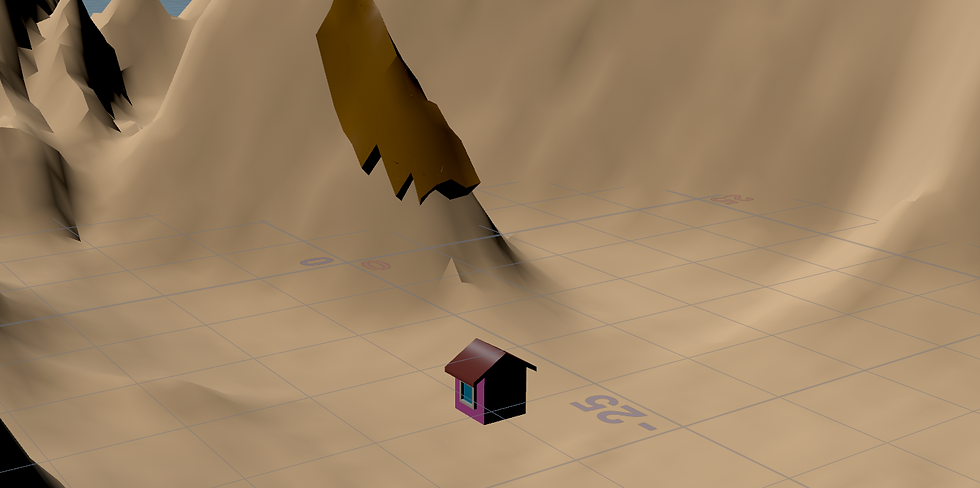
The landslide consisted of multiple RBD material fractures applied on the landslide chunk that would be affected by the forces of gravity, density and slope elevation. The building was pre-fractured using a RBD material fracture but consisted of high glue constraints in order to keep the building together before impact.
Likewise, the landslide contained high glue value properties that allowed for semi-fracturing as well as chipping damage to occur whilst sliding down the mountain slope towards the building.

Rendering and output
To complete the landslide simulation, textures were added onto the 3D models in Houdini and lighting was introduced. Two cameras were added into the scene to capture two angles of the landslide simulation.
Final renders were cached and translated into a video output to complete the landslide simulation. This project encompasses 3D modelling, procedural networks, VFX, HDA output (Unity) and rendering to complete the final sequence.
![[RQ]LandslideShowreel.mp4](https://static.wixstatic.com/media/41a4b7_9fe785a69a3d4fdb989f1bd91853b5d6f000.jpg/v1/fill/w_980,h_551,al_c,q_85,usm_0.66_1.00_0.01,enc_auto/41a4b7_9fe785a69a3d4fdb989f1bd91853b5d6f000.jpg)